Learning apps and tutoring compared: what fits your elementary school child
ANTON, Photomath, Duolingo, tutoring institutes, YouTube explainer videos, and now AI apps on top: the market for learning aids has become confusing, and every option promises to be exactly right for your child. The truth is less convenient: there is no best tool, only the right tool for a concrete problem.
This guide sorts the market for you: what kind of help is meant for what, where the honest limits are, and how to find the right combination for your child. Yes, Gennady, our own product, appears in it too, with its strengths and its limits.
First understand the problem, then pick the tool
Before installing an app or booking tutoring, an honest diagnosis pays off: what exactly is the problem? "My child is bad at math" is not a diagnosis. Does your child practice too little and need repetition? Do they not understand new topics and need explanation? Is motivation missing? Or do they fail at reading the tasks?
Each of these problems needs a different tool. Practice apps like ANTON are built for repetition but do not help with the worksheet your child brings home from school. Answer apps like Photomath show the solution with the working straight away for the math problem you photograph. Tutoring explains individually but costs money for every hour and happens at fixed appointments, while the homework problem happens daily.
Practice apps: great for repetition, weak for real questions
ANTON is one of the biggest learning apps in Germany: more than 300,000 ratings in the German App Store, all content free and ad-free, aligned with the curricula of the German federal states, with exercises for many subjects. If your child has understood the material and needs practice, ANTON is a clear recommendation, and this guide does not change that.
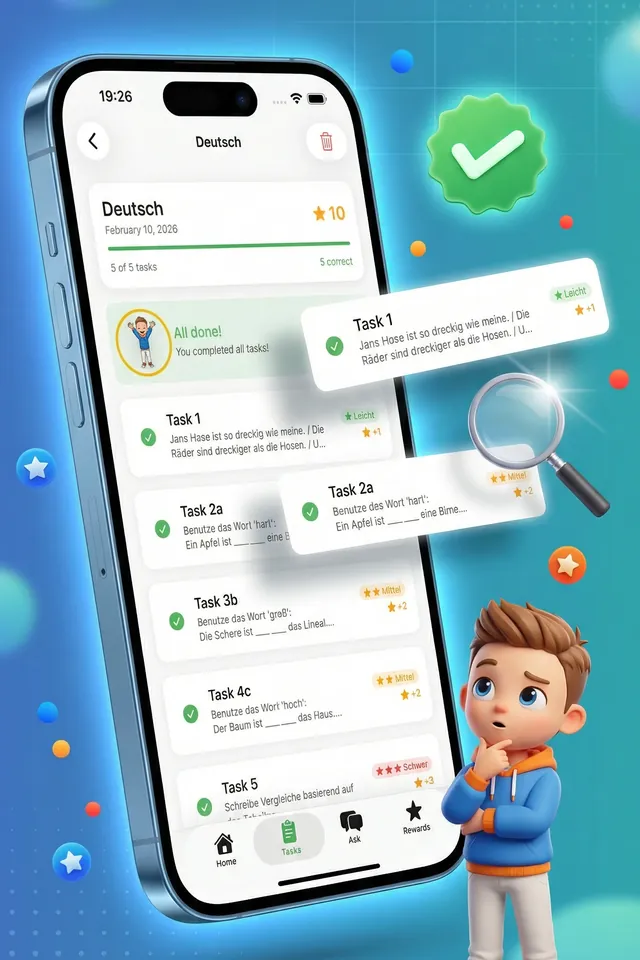
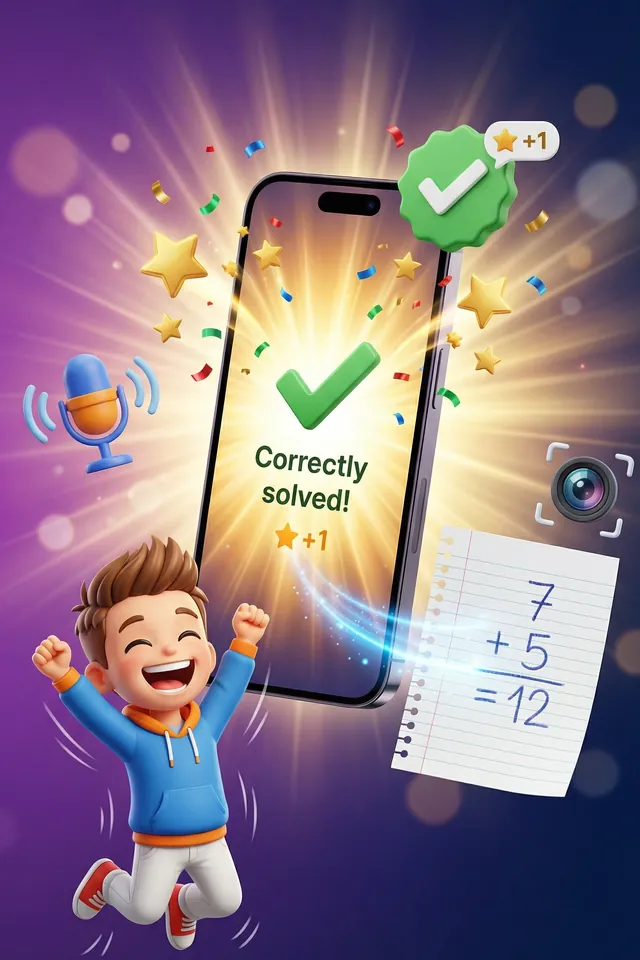
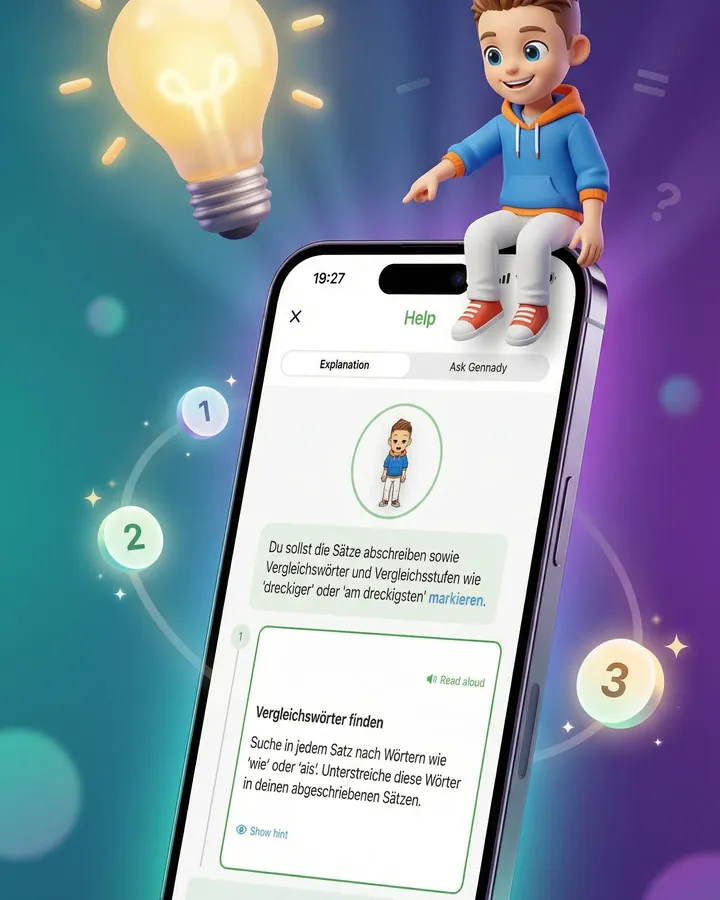
The limit of practice apps lies elsewhere: they set their own exercises. No practice app knows the worksheet your child brought home from school today. When your child is stuck on task 3b, the best practice app cannot help. That is exactly the case Gennady exists for: scan the worksheet, and the concrete task is explained in child-friendly language. The two kinds of app do not replace each other, they complement each other.
Answer apps: fast, but the solution comes first
Photomath and similar apps are technically impressive: photograph the problem, the solution appears, method included, according to the provider from elementary school through college. For anyone checking their own results, that is a legitimate tool. For elementary school children, though, it means the solution is on the screen before the child has worked anything out. Try out whether your child really follows the method or just copies the result.
The core of the difference: an answer app answers the question "What is the result?". A learning tool answers the question "How do I get there myself?". For elementary school, where basic understanding is being built, the second question is the only one that matters.
Tutoring: effective, but expensive and rarely necessary
Classic tutoring is the most intensive form of help: a person sees your child, spots gaps and adapts. For real gaps that have grown over months, nothing replaces it. But it is expensive, logistically demanding, and in elementary school often not what is actually needed: many elementary school problems are everyday problems (today’s homework, the current topic), not structural gaps.
An honest rule of thumb: if your child has been falling behind in a subject for more than half a year and the teacher confirms it, consider tutoring. If the problem is the daily homework battle, structure (see our guide for parents on homework in elementary school) plus an explanation tool like Gennady is the better fitting and far cheaper answer.
The right combination for your child
Try a combination: a practice app for repetition and consolidation, an explanation tool for the daily homework questions, and tutoring only when structural gaps exist. More important than any tool remains the framework: fixed times, realistic expectations and an adult who listens for five minutes in the evening to what was learned today.
The linked articles and comparison pages give you the details: ANTON versus Gennady, Photomath versus Gennady and the big overview of the best learning apps for elementary school, each with an honest assessment of when the competition is the better choice.
Comparisons and articles on this topic
Gennady vs. ANTON: explaining or practicing?
Two apps, two jobs: why ANTON and Gennady complement rather than replace each other, and when which app is the right one.
Read moreGennady vs. Photomath: solution or learning path?
Photomath shows the solution with the working, Gennady explains the method first. What that means concretely for elementary school children, with honest limits on both sides.
Read moreThe best learning apps for elementary school in 2026
The big overview: which apps are worth it for elementary school children in 2026, what they cost and who they fit.
Read morePhotomath for elementary school children: an honest assessment
What the well-known math app offers ages 6 to 11, where its limits are and which alternatives exist.
Read moreHomework App for Elementary School: Solver or Explainer?
Which homework apps show the answer right away and which give hints first: nine apps compared by age, cost and ads.
Read moreHomework Help in Elementary School: Options and Costs
What homework help for elementary school kids costs, what is free and what can be deducted from taxes (as of September 2026).
Read more
For the task on the table today
Gennady explains your child’s actual worksheet: scan it, understand step by step, solve it yourself. A complement to practice apps, not a replacement.