Homework help for multilingual families
Just over a fifth of school children under 16 in Germany mainly or only speak a language other than German at home. That is not a footnote, it is everyday life in a great many families: the child brings home a German worksheet, and mom or dad can do the math but cannot understand the wording of the task confidently enough to help.
If that is your situation: you are not alone, and your child is not at a lifelong disadvantage because of it. Multilingualism is a long-term asset. But the homework afternoon needs practical solutions, and that is exactly what this guide is about.
The real problem: language stands between parents and the task
Let us make it concrete: a third-grade word problem uses words like "difference", "in total", "each" or "left over" in their German academic forms. These are not everyday words, this is academic language, and it is a hurdle even for parents with solid conversational German. The result: parents who could easily help with the actual math fail at the wording of the task.
For the child this creates a double burden. They have to learn the school material and at the same time work as the family’s translator. Some children translate the task for their parents, receive the explanation in the family language and translate their answer back into German. That is a remarkable feat, but it burns energy that should go into learning.
What experts advise: keep speaking the family language
One stubborn myth first: no, you do not have to switch to broken German at home so your child can keep up at school. Till Woerfel of the Mercator Institute for Language Education and German as a Second Language advises parents to offer their children varied language input in all of the family’s languages, German and the family language alike (interview in the German school portal Deutsches Schulportal). Concepts a child has understood in one language often only need to be renamed in the second, not learned again.
Practically this means: if you can explain fractions in Turkish, Ukrainian or Arabic, do it. Your child can then carry that understanding over into German. The problem is often not the family language, it is the missing access to the German task wording. And that access can be created today.
German worksheet, explanation in your language
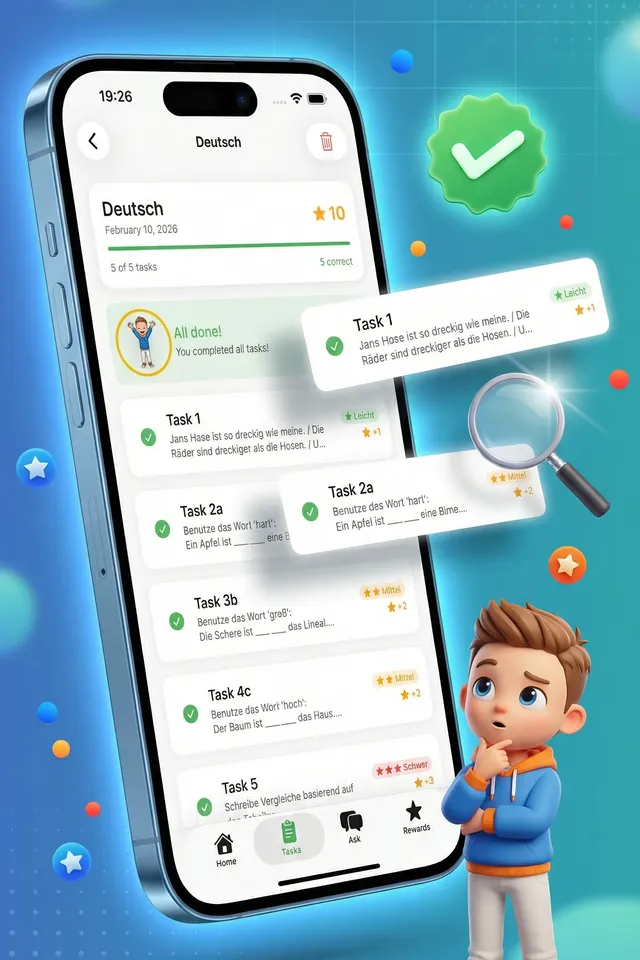
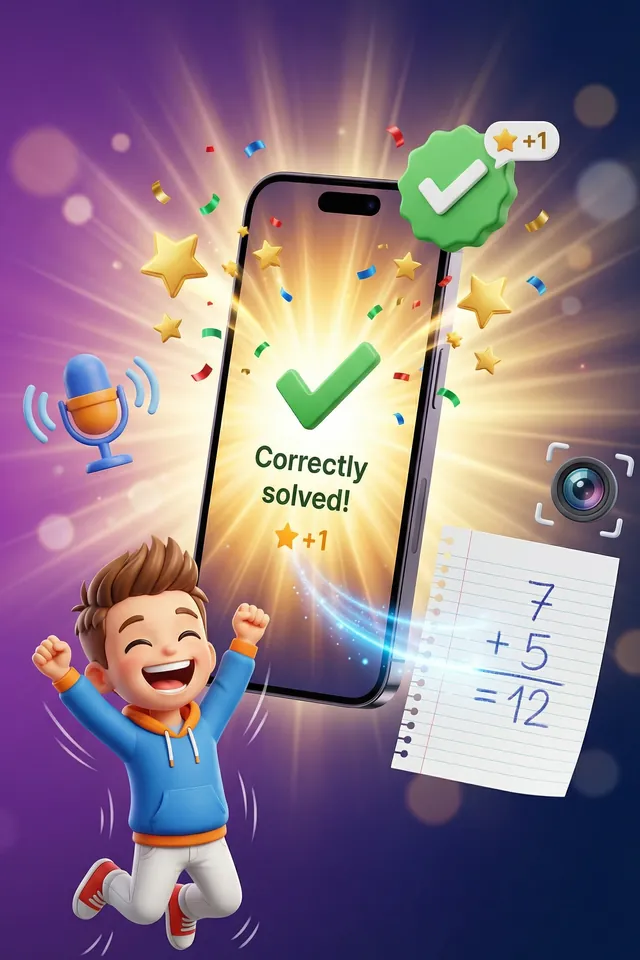
This is where we bring in Gennady, because this is exactly the situation where the app is strongest: your child scans the German worksheet, and Gennady explains the task step by step in child-friendly language, in one of 21 languages if you wish, for example Turkish, Ukrainian, Russian, Polish or English. The German original stays visible, the explanation comes in the language you chose. To be clear: the app itself is available in 32 languages but explains in only 21 of them; in other app languages such as Arabic, Gennady explains in German.
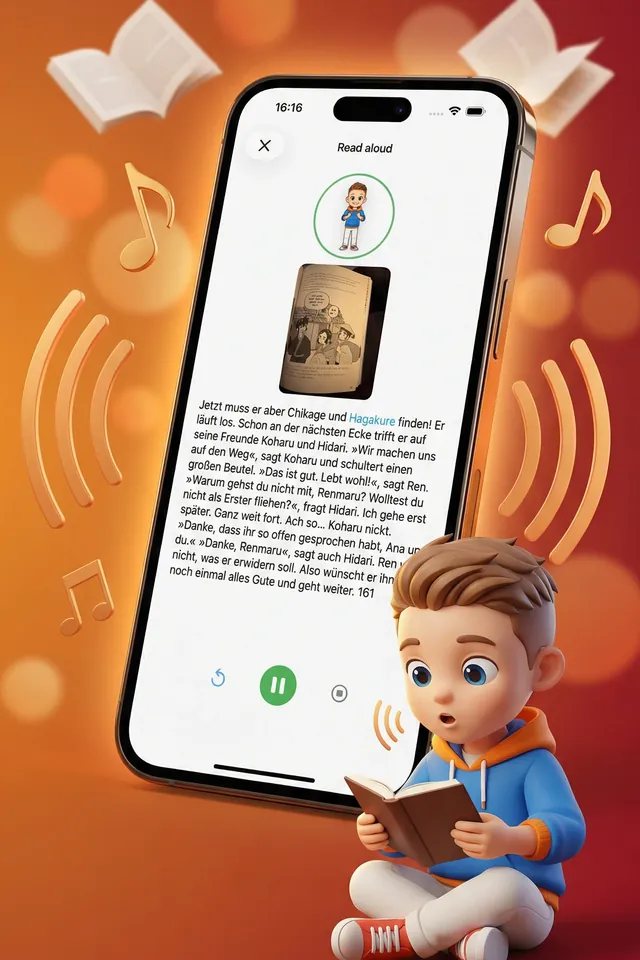
That turns the situation around: instead of your child translating for you, they understand the task themselves, and you can check in your shared language whether they really got it. The read-aloud feature additionally helps beginning readers grasp the German task in the first place: Gennady reads it out and highlights it word by word.
An app replaces neither language support at school nor contact with the teacher. If your child is clearly behind the class in German, ask the school about remedial support. Gennady removes the daily bottleneck at the kitchen table, not the long-term language development.
Practical tips for everyday life
First: separate understanding from language. Have your child explain the task in the family language first ("What are you supposed to do here?"). Once understanding is there, the German answer is the smaller step. Second: build a small vocabulary notebook for academic language: "in total", "the difference", "complete", "explain why". Even twenty such words turn up in many elementary school task wordings.
Third: treat the school as a partner, not an opponent. Teachers usually know which children speak another language at home, and many adapt their feedback when parents openly say where things get stuck. A short conversation, with a translation app if needed, achieves more than a year of quietly muddling through.
And fourth: stay proud of your bilingualism. Children sense very precisely whether their family language is treated as a treasure or as a problem at home. Show your child that both languages are worth something.
In-depth articles and features
Homework help for multilingual families: the practical guide
Concrete strategies for families where little German is spoken at home: from the vocabulary notebook to the parent-teacher meeting.
Read moreGerman Primary School Homework Help for International Parents
How German elementary school works, what grades 1 to 6 mean, the worksheet vocabulary, and where to find support if German is not your first language.
Read moreHow worksheet scanning works in Gennady
Take a photo, let the tasks be recognized, get the explanation in one of 21 languages: the scan feature in detail.
Read more
German worksheet, explanation in 21 languages
Gennady scans the worksheet from school and explains it to your child step by step, for example in Turkish, Ukrainian, Russian or Polish if you wish.