ChatGPT is impressively capable: it answers almost any question, writes texts and solves homework in seconds. Some parents therefore try it as homework help. But ChatGPT is not approved for primary school children: OpenAI only allows use from age 13, and from 13 to 17 only with parental consent. Its parental controls (since September 2025) and teen mode are aimed at teenagers. The standard chat gives direct answers on any topic; study mode (since July 2025) guides step by step instead, but can be switched off at any time.
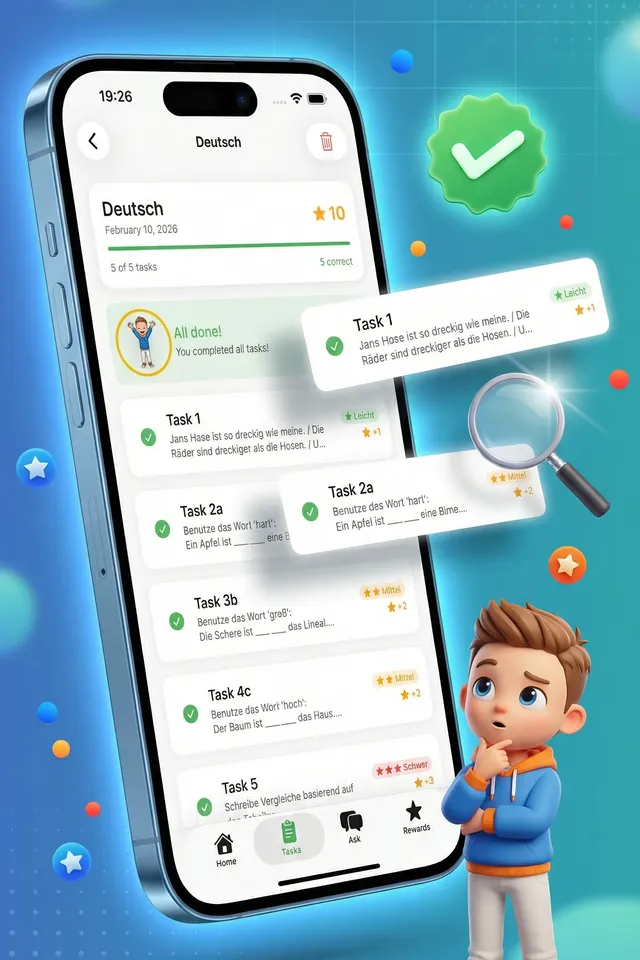
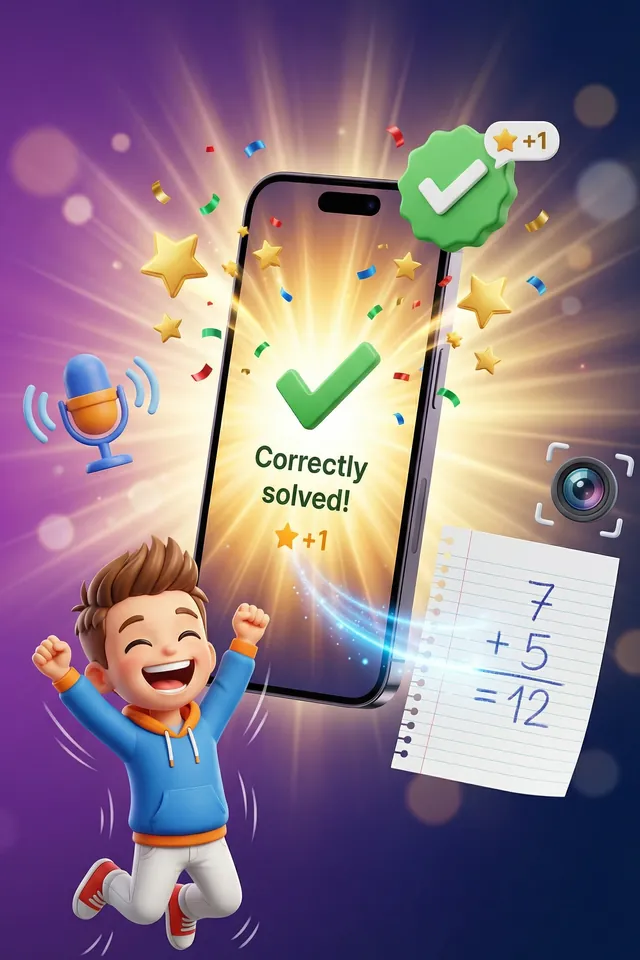
Gennady takes a different approach: a homework app built for children aged 6 to 11. The child scans their worksheet, gets an age-appropriate explanation step by step and answers the task themselves. A math question for parents protects setup, signing out, deleting the account and redeeming a voucher. If the answer is wrong, there are hints first; Gennady shows the correct solution for comparison only on the third try. The last hint of an explanation leads right up to the result; the child takes the last step on their own. So the comparison is less about "which can do more?" and more about "which is made for a child?".
Feature comparison
| Criterion | ChatGPT | Gennady |
|---|---|---|
| Target group / age | Per OpenAI from age 13, ages 13 to 17 with parental consent | Primary school kids, ages 6 to 11 |
| Scans real homework | Image upload in the chat, no dedicated worksheet flow | Yes, worksheet scanning is the core feature |
| Explains step by step | Yes in study mode (since July 2025, can be switched off at any time) | Yes, automatically child-friendly and age-adapted |
| Hands out finished solutions | Yes in the standard chat; study mode holds back direct answers | Only on the third try, hints before that |
| Checks the child’s answer | Study mode with follow-up questions and quizzes | Yes, checks the child’s own answer |
| Read-aloud | Voice mode, not made specifically for children | Yes, with word-by-word highlighting |
| Languages | Many languages | App in 32 languages, explanations in 21 of them |
| Pricing | Free basic version, subscription for more | 7-day free trial, then a subscription via the App Store |
| Child safety | Not approved under 13; parental controls for ages 13 to 17 since September 2025 | No ads; a math question for parents before setup, signing out, deleting the account and redeeming a voucher |
When ChatGPT is the better fit
For you as a parent, ChatGPT can be a useful tool. If you no longer understand a task yourself, for example because math is taught differently today than it used to be, ChatGPT can explain the background to you. You sit next to your child, ask the questions and translate the answer for them. In this role, as a tool in adult hands, ChatGPT plays to its strength: enormous breadth on almost any topic.
ChatGPT can also help older students from age 13 who have learned to treat AI answers critically, for example in study mode. For children under 13, however, it is not approved, and OpenAI says so itself with the age limit.
When Gennady is the better fit
As soon as the child is supposed to work with the app themselves, the requirements change completely. A primary school child needs explanations in simple language and a clear flow that invites independent thinking. That is what Gennady is designed for: scan the worksheet, listen to a child-friendly explanation, answer yourself (via voice, text or photo), get feedback, collect stars for correct answers.
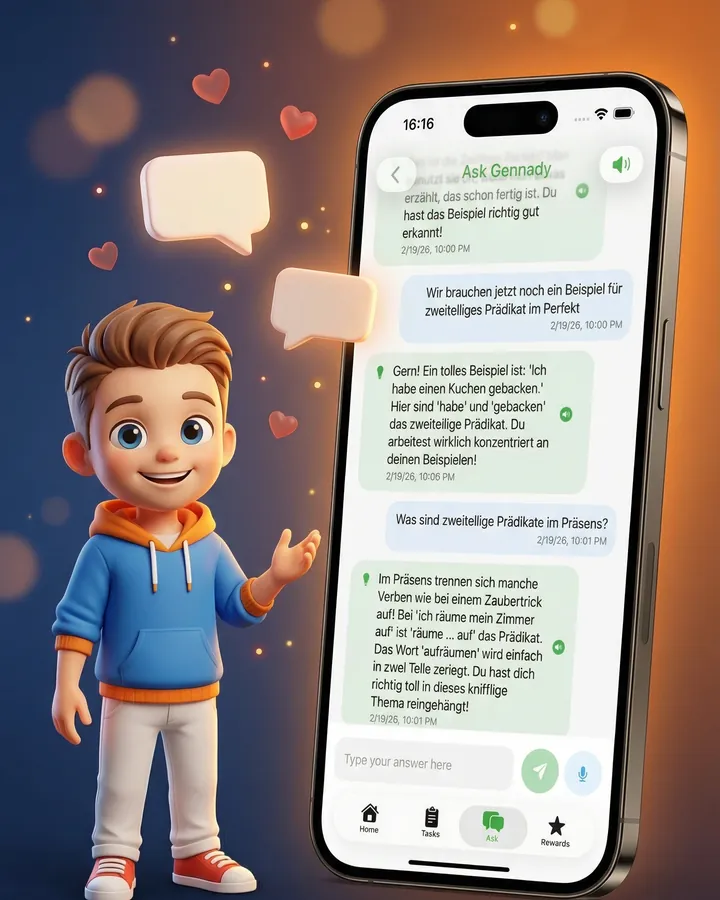
An important difference is the flow. In the standard chat, ChatGPT delivers the complete solution on request; study mode guides instead, but can be switched off at any time. Gennady explains the method step by step and checks your child’s answer. If the answer is wrong, there are hints first; Gennady shows the correct solution for comparison only on the third try. The last hint of an explanation leads right up to the result; your child takes the last step on their own. Honest limit: Gennady does not replace an open research tool. It is built for homework, not for everything.
Verdict: a tool for parents vs. an app for the child
ChatGPT and Gennady only compete at first glance. ChatGPT is a versatile tool for adults and teenagers from age 13, with a study mode and parental controls for teens. Gennady is a homework app for children aged 6 to 11: the app reads the task aloud, explains the method step by step and checks your child’s answer. If your primary school child should work on their homework with an app themselves, try Gennady. If you need background knowledge yourself, use ChatGPT by all means, and stay seated next to your child.
You can find more context in our big learning app comparison and on the page about worksheet scanning.
Frequently asked questions
Is my primary school child even allowed to use ChatGPT?
According to OpenAI, ChatGPT is only allowed from age 13, and from 13 to 17 only with parental consent. Use by children under 13, which includes primary school children, is not intended.
Doesn’t Gennady use AI just like ChatGPT?
Yes, Gennady also works with AI. The difference is the framing: Gennady is an app for children aged 6 to 11 without ads, and the flow follows the worksheet: read aloud, explain step by step in age-appropriate language, check the child’s answer. If the answer is wrong, there are hints first; Gennady shows the correct solution for comparison only on the third try.
What stops my child from simply copying with Gennady?
Gennady explains the method step by step first, and your child gives the answer themselves, via voice, text or photo. Gennady doesn’t give the solution right away: hints come first, and the app shows the correct solution on the third try. That way your child thinks it through before comparing. It pays to practice together at the start: think first, then let it check. Also try having your child explain afterwards, in their own words, how they got to the result.
Try Gennady free for 7 days
AI homework help for kids aged 6 to 11, without ads: explains step by step and checks your child’s answer.